
Spain as a Study Destination for International Students 2026/2027: The Smart European Alternative
Discover why Spain is rapidly becoming the most strategic European study destination for international students in 2026/2027 — recognized EHEA degrees, growing English-taught programs, and an unmatched quality of life without UK or USA price tags.

Introduction
For decades, studying in Europe meant navigating extreme tuition fees in the UK or fiercely competitive, highly rigid language hurdles in Germany and the Nordics. Spain has broken that mold. Today, it stands as one of Europe’s most attractive study destinations, combining academic prestige, accessible private universities, EU Schengen mobility, and a vibrant cultural lifestyle.
This article is written for students worldwide — from Asia and Africa to the Middle East, Latin America, and beyond — who want a legitimate European degree and international exposure without financial devastation.
Why do students choose Spain? (the big picture)
Spain positions itself distinctly from the “elite and exclusive” Anglo-American model. It offers a practical, highly engaging European alternative:
- Direct access to the European Union and Schengen mobility
- Rapidly expanding 100% English-taught Bachelor’s and Master’s programs
- Accessible private universities and business schools with flexible admissions
- Significantly lower tuition and living costs compared to the UK, USA, or France
- The opportunity to learn Spanish, the world’s second-most spoken native language
“The internationalization of Spanish higher education has transformed the Iberian Peninsula into a vital academic bridge connecting Europe, Latin America, and global student mobility.”
How the Spanish education system works
Spain is a key member of the Bologna Process within the European Higher Education Area (EHEA). This means any accredited Bachelor’s (Grado), Master’s (Máster), or Doctoral degree earned in Spain is standardized and recognized across all 27 EU member states and globally.
While public universities often require complex local entrance exams (Selectividad/PCE), Spain’s dynamic private university and international business school sector offers streamlined admissions, global accreditation frameworks, and English-medium instruction tailored specifically for international applicants.
“European higher education systems that combine EHEA accreditation with flexible international admissions gain a decisive edge in global talent attraction.”
Private universities in Spain (the low-budget European reality)
Unlike the USA or UK, where tuition can easily exceed USD 30,000–50,000 per year, Spain’s private and international universities offer a high-value European education at a fraction of the cost.
| Study level | Average annual tuition (USD) | Key advantage |
|---|---|---|
| Undergraduate programs | USD 4,500 – 11,000 / year | Fully accredited EU degree at a third of UK/US prices |
| Master’s programs | USD 5,000 – 14,000 / year | 1-year intensive programs designed for global employment |
Top university options for international students
Whether you are seeking accessible, budget-friendly campuses or globally elite business institutions, Spain offers a diverse range of institutions for international applicants.
Accessible & international-friendly private institutions
- UCAM (Universidad Católica de Murcia): Known for exceptionally competitive tuition, strong sports science, business, and health programs taught in English.
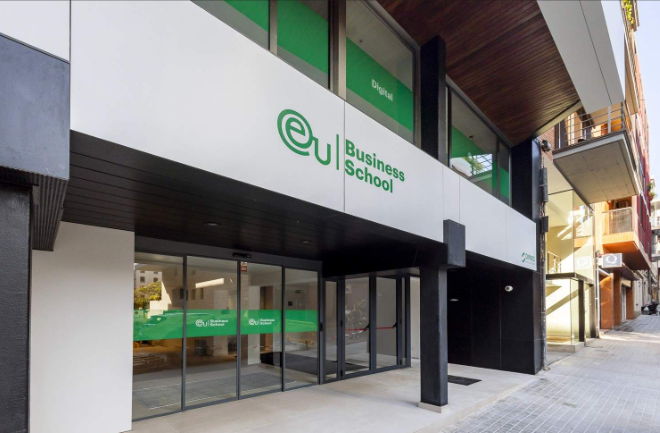
- EU Business School (Barcelona & Madrid): Highly flexible international admissions, modern English-taught business curriculum, and global transfer pathways.
- GBSB Global Business School (Madrid & Barcelona): Digital-first business and tech programs taught 100% in English with a highly international student body.
- Universidad Europea (Madrid & Valencia): One of Spain’s largest private universities, offering cutting-edge facilities in engineering, architecture, and international business.
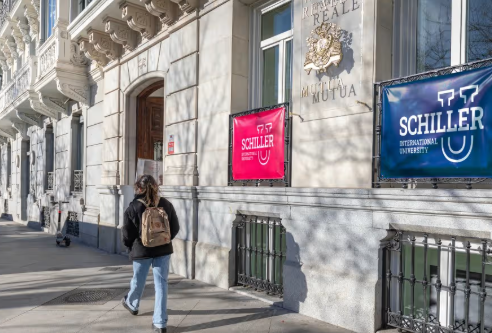
- Schiller International University (Madrid): Offers American-style degree structures in the heart of Spain, perfect for international mobility.
- Marbella International University Centre (MIUC): A boutique, English-taught campus offering media, international relations, and business degrees.
- ESERP Business & Law School: Exceptionally budget-friendly degrees and diplomas in management, marketing, and criminology.
Premium private & elite universities
- IE University (Madrid & Segovia): A world-top-ranked European powerhouse for entrepreneurship, law, and international management.
- ESADE & IESE Business Schools (Barcelona): Consistently ranked among the global top 10 for MBA and executive business education.
- Universidad Carlos III de Madrid (UC3M): A premier bilingual institution renowned for economics, engineering, and social sciences.
- Universitat Pompeu Fabra (UPF – Barcelona): Top-tier academic reputation in Europe for economics, political science, and humanities.
Acceptance rate: what are your chances?
Compared to traditional Northern European institutions, Spain’s private universities and international business schools evaluate applicants holistically rather than through rigid quotas:
- Private universities and business schools: 65% – 85% acceptance rate for qualified applicants
- Foundation and Year-1 pathway programs: extremely high accessibility for international high school graduates
- Master’s programs: direct evaluation based on academic transcripts, motivation, and practical capability
“Spain has steadily increased its international student retention by simplifying entry pathways within private higher education institutions.”
Advantages of studying in Spain
- 1. English-taught degrees + Spanish acquisition
You can study your entire degree 100% in English while naturally acquiring Spanish in daily life — graduating with a bilingual edge in the global job market.
- 2. Affordable European living costs
Monthly living costs range from USD 600 – 950 (even less in cities like Murcia, Valencia, or Seville). Rent, groceries, and public transit are substantially cheaper than in London, Paris, or Amsterdam.
- 3. Schengen visa & EU mobility
A Spanish student residency card (TIE) allows you to travel freely across all 29 Schengen countries, opening doors to European networking, conferences, and cultural exploration.
“Cross-border mobility within the Schengen Area significantly enhances student social capital and international career readiness.”
Disadvantages of studying in Spain (the honest section)
No study destination is perfect, and we believe in total transparency:
- Slow administrative bureaucracy: Securing your initial student visa at the embassy and booking appointments for your physical Spanish residency card (TIE/NIE) upon arrival requires patience and structured paperwork.
- Local job market competitiveness: While Spain is incredible for study and quality of life, entering the local Spanish job market after graduation typically requires professional Spanish fluency and determination.
- Summer climate: Southern and inland cities (like Madrid, Seville, or Murcia) experience intense, dry summer heat from June to August.
“Student adjustment in Southern Europe is often moderated by institutional support in navigating local civic and immigration procedures.”
Cultural differences: Spain vs. other destinations
| Feature / norm | Spain | UK & USA | Germany / Nordics |
|---|---|---|---|
| Social lifestyle | Highly social, outdoor-centric, warm, and community-driven | Campus-centered, highly individualized | Private, independent, reserved social norms |
| Academic style | Interactive, collaborative, practical focus | High tuition stress, competitive grading | Heavy theoretical focus, strict exam grading |
| Language ease | 100% English programs available; Spanish is easy to learn | Native English instruction | English Master’s exist, but the local language is tough |
| Cost of living | Moderate (USD 600 – 950/mo) | Very high (USD 1,200 – 2,500/mo) | High (USD 1,000 – 1,600/mo) |
Is Spain right for you?
- You want an accredited European (EHEA) university degree
- You want English-taught programs with lower tuition than the UK or USA
- You want freedom to travel across the European Schengen Area
- You want a warm, vibrant, and safe cultural lifestyle
- You want a bilingual resume booster (English + Spanish)
- Your main goal is instant permanent residency without learning any Spanish
- You are looking for fully funded, all-inclusive government scholarships
- You expect a fast, zero-paperwork immigration experience
- You are moving purely for immediate full-time employment
Wordly Admissions & Spain
At Wordly Admissions Ltd, we specialize in connecting international students with excellent, accessible private universities and business schools in Spain. We guide students through the university selection, application, and Spanish visa process.
- Guaranteed university admission (provided you meet basic eligibility)
- Partnerships only with legitimate, EHEA-accredited private institutions and schools
- Structured guidance through application timelines and student visa documentation
- Scholarships
- Free education
Spain is about smart European access and academic value, not relying on the lottery of scholarships.
Why many students choose this route
“Accessible private higher education in Europe allows global students to bypass traditional gatekeeping and secure internationally portable qualifications.”
Spain gives ambitious students a prestigious European footprint, a more affordable cost structure, and a life-changing cultural experience.
Final verdict: Spain in 2026
Spain is not trying to sell an overpriced, debt-heavy study model. It competes on quality of life, European accreditation, and accessibility. For students worldwide who want an English-medium degree in Europe with Schengen mobility and manageable financial stress, Spain stands as a brilliant strategic choice.
Ready to Start Your Journey to Spain?
We make the entire university application and visa preparation process straightforward, predictable, and stress-free.
Apply now to study in SpainBibliography & references
- De Wit, H. (2015). Internationalization of Higher Education in Europe. European Parliament.
- European University Association (EUA). Trends in European Higher Education.
- OECD (2025). Education at a Glance: OECD Indicators. OECD Publishing.
- Teichler, U. (2009). Higher Education and the World of Work. Sense Publishers.
- Ward, C., Bochner, S., & Furnham, A. (2001). The Psychology of Culture Shock. Routledge.
- Marginson, S. (2011). Higher Education and Global Mobility. Palgrave Macmillan.